Introduction
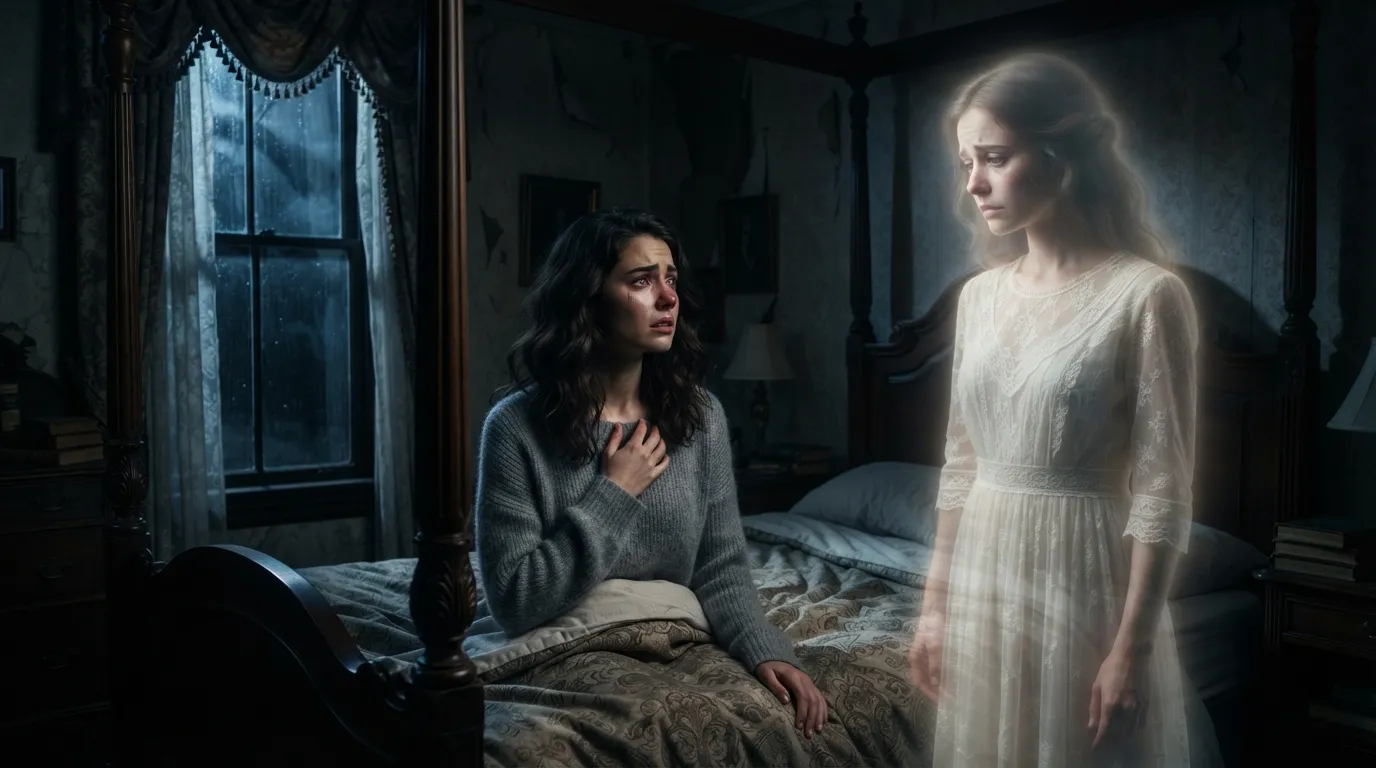
Seeing a ghost in a dream can be one of the most unsettling experiences you have while sleeping. You may wake up frightened, confused, or deeply curious about why your mind created such a powerful image.
The question “what does it mean if you see a ghost in your dream?” does not have one universal answer. A ghost can symbolize unresolved emotions, memories, fear, grief, change, hidden parts of yourself, or something from the past that still needs your attention.
From a spiritual perspective, a ghost may represent unfinished emotional energy, a transition, a reminder from the past, or a need for inner healing. From a psychological perspective, it can reflect anxiety, memories, stress, grief, or emotions that your conscious mind has not fully processed.
The meaning depends greatly on what the ghost was doing, who it looked like, where you saw it, and most importantly, how you felt during the dream.
What Does It Mean If You See a Ghost in Your Dream?
A ghost in a dream often represents something that feels present in your life even though it is no longer physically present.
It may be an old memory.
It could be a past relationship.
It might be grief over someone you lost.
It could also represent an old fear, regret, habit, or emotional wound.
The ghost becomes a symbol of something that continues to occupy psychological or emotional space.
For this reason, seeing a ghost does not automatically mean something supernatural is happening.
Dreams frequently use familiar images to represent complicated emotions.
The Ghost as a Symbol of the Past
Ghosts are strongly connected with the past.
Something that happened months or years ago may still influence how you think and feel today.
Perhaps you experienced rejection.
Maybe someone hurt you.
You could be remembering a person you no longer see.
The dream may bring that experience back because some emotional part of it remains unresolved.
The Ghost as a Symbol of Unresolved Emotions
One of the most common symbolic interpretations of a ghost is unfinished emotion.
You may have moved on physically but not emotionally.
For example, a relationship may have ended, yet you still wonder what could have happened.
A friendship may have disappeared, but the memories remain.
A difficult experience may be over, but your body and mind still remember it.
The ghost can represent that emotional remainder.
Spiritual Meaning of Seeing a Ghost in a Dream
In spiritual dream interpretation, a ghost can symbolize transition, unresolved energy, spiritual reflection, emotional attachment, or a reminder to release the past.
Some spiritual traditions interpret ghost dreams as messages about things that require closure.
Others view them as symbolic reflections of the dreamer’s own emotional state.
Because spiritual beliefs differ, it is important not to assume that every ghost dream represents an actual spirit.
The personal context of the dream matters most.
Ghosts and Spiritual Transformation
A ghost can represent something that once had power over you but no longer belongs in your current life.
You may be changing.
Your priorities may be changing.
Your relationships may be changing.
Your old identity may no longer fit.
The ghost can symbolize the version of yourself that you are gradually leaving behind.
The Ghost as Your Hidden Self
Sometimes the ghost represents a part of yourself that you have ignored.
This may be an emotion you suppress.
It could be anger.
It could be sadness.
It could be fear.
It might even be a talent or desire you stopped pursuing.
When that hidden part appears as a ghost, your dream may be encouraging you to acknowledge it.
The Shadow and the Ghost
A ghost can sometimes function like a shadow symbol.
The shadow represents aspects of yourself that you do not easily accept or recognize.
For example, you may see yourself as calm but suppress anger.
You may consider yourself independent but secretly fear abandonment.
You may appear confident while privately feeling insecure.
The ghost can represent the emotional material that exists outside your usual self-image.
Ghosts and Suppressed Emotions
Suppressed emotions do not necessarily disappear.
They may return through thoughts, reactions, memories, or dreams.
If you consistently avoid grief, anger, fear, or regret, your dreams may provide a space where those emotions become visible.
The ghost may therefore represent an emotion asking to be acknowledged.
Why Does the Ghost Feel So Real?
Dreams can be extremely vivid.
During certain stages of sleep, especially REM sleep, emotional and visual brain activity can produce realistic experiences.
Your brain can create a convincing person, environment, voice, or threat.
This is why a ghost dream can feel completely real even after you wake up.
Feeling that the dream was real does not prove that the event literally occurred.
Psychological Meaning of Seeing a Ghost
Psychologically, a ghost can represent fear, grief, memory, anxiety, unresolved conflict, trauma-related emotions, or the feeling that something from the past is still affecting you.
Your brain often communicates through symbols rather than direct statements.
Instead of dreaming, “I am still worried about my past,” you might dream about a ghost appearing in your home.
The emotional message may be similar.
Freudian Perspective on Ghost Dreams
From a Freudian perspective, dreams can reflect hidden wishes, fears, memories, and conflicts.
A ghost could symbolize something emotionally significant that has been pushed outside conscious awareness.
The dream may allow that material to return in symbolic form.
However, Freudian dream interpretation is one historical framework rather than a scientifically proven universal decoding system.
Jungian Perspective on Ghost Dreams
Carl Jung placed strong emphasis on symbolism and the unconscious mind.
From a Jungian perspective, a ghost may represent an unintegrated part of the psyche.
It might symbolize something the conscious personality has rejected.
The dream can therefore be viewed as an invitation toward greater self-awareness.
Spiritual and Psychological Meanings Can Overlap
You do not necessarily have to choose between spiritual and psychological interpretations.
A spiritual interpretation may ask:
What does this experience teach me?
A psychological interpretation may ask:
What emotion or memory is this dream expressing?
Both approaches can encourage reflection.
Seeing a Friendly Ghost
A friendly ghost can carry a very different emotional meaning from a threatening one.
If the ghost was peaceful, it may symbolize acceptance.
You may be becoming comfortable with something from your past.
The dream may also represent a memory that no longer feels painful.
Seeing a Scary Ghost
A frightening ghost may represent fear or unresolved anxiety.
Something in your waking life may feel threatening even if there is no physical danger.
The dream can exaggerate that emotional fear.
A Ghost Chasing You
Being chased by a ghost is a powerful dream scenario.
It may symbolize avoidance.
You could be running away from a memory, responsibility, emotion, or difficult decision.
The ghost follows because the issue has not been emotionally resolved.
Running Away From a Ghost
Running suggests avoidance.
You may know that something needs to be addressed but do not feel ready.
The dream may be encouraging you to stop running emotionally.
This does not mean you must confront everything immediately.
It means you may need to understand what you are avoiding.
Hiding From a Ghost
Hiding can symbolize emotional suppression.
You may be trying not to think about something.
Perhaps you avoid a difficult conversation.
Maybe you are trying not to remember a painful experience.
The dream may suggest that avoidance is becoming exhausting.
Fighting a Ghost
Fighting a ghost can represent resistance.
You may be trying to overcome something from your past.
It can also symbolize an internal conflict.
Part of you wants to move forward while another part remains attached to an old situation.
Talking to a Ghost
Talking to a ghost can symbolize a desire for answers.
You may want closure.
Perhaps you wish you could explain something to someone from your past.
The conversation may represent your mind attempting to complete an unfinished emotional dialogue.
A Ghost Talking to You
Pay attention to what the ghost says.
Dream dialogue can reflect your own thoughts, fears, memories, and concerns.
If the ghost says something encouraging, it may reflect your need for reassurance.
If it says something frightening, it may represent anxiety.
The words should be interpreted in context rather than taken as a literal prediction.
A Ghost Calling Your Name
Hearing your name in a ghost dream can feel intense.
Symbolically, it may represent attention.
Something may be demanding your awareness.
The dream could be highlighting an emotion or issue you have ignored.
A Ghost Touching You
Physical contact in dreams can feel especially vivid.
A ghost touching you may symbolize emotional closeness to a memory or experience.
It can also represent fear of losing control.
The meaning depends on whether the touch felt comforting or threatening.
A Ghost Watching You
A ghost watching you may represent self-consciousness.
You may feel judged.
Perhaps you are worried about how others see you.
The ghost can symbolize your own internal observer.
A Ghost Standing in the Distance
A distant ghost may symbolize an issue that remains emotionally important but is gradually becoming less powerful.
You may still remember something without being controlled by it.
The distance itself can represent emotional separation.
A Ghost Disappearing
When a ghost disappears, the dream may symbolize release.
Something may be losing its emotional hold over you.
It can represent closure, acceptance, or moving forward.
If you felt peaceful afterward, this interpretation may be especially relevant.
A Ghost Appearing and Disappearing
Repeated appearances can symbolize an unresolved issue that comes and goes.
You may feel fine for a while and then suddenly remember something.
The dream may reflect this emotional cycle.
Seeing Many Ghosts
Many ghosts may symbolize multiple unresolved experiences.
You may be carrying several concerns at once.
The dream could represent emotional overload.
It may be helpful to identify which part of your life currently feels crowded with unfinished issues.
Seeing a Ghost in Your House
A house often symbolizes the self, personal life, or emotional world.
A ghost inside your home may therefore represent an issue that has entered your private emotional space.
It could be a family memory, relationship issue, or personal fear.
Seeing a Ghost in Your Bedroom
Bedrooms are associated with privacy, rest, intimacy, and vulnerability.
A ghost there may symbolize something affecting your emotional security.
It can also reflect worries that become stronger when you are alone.
Seeing a Ghost in Your Childhood Home
This scenario strongly connects the ghost with the past.
Your childhood home may represent old memories, family experiences, or early beliefs.
The ghost may symbolize something from that period that still affects you.
Seeing a Ghost at School
School dreams often involve learning, evaluation, and social experiences.
A ghost at school may represent an old insecurity.
Perhaps you still carry fear of judgment or failure from earlier experiences.
Seeing a Ghost at Work
A workplace ghost may represent career anxiety.
You might feel haunted by a previous mistake.
You may fear repeating an old professional experience.
The dream can encourage you to separate past events from your present identity.
Seeing a Ghost in a Church
A church can symbolize faith, morality, spirituality, forgiveness, and reflection.
A ghost in this setting may represent spiritual questions or unresolved feelings.
It may also reflect your search for meaning after a difficult experience.
Seeing a Ghost in a Cemetery
A cemetery naturally connects with death, memory, endings, and the past.
A ghost there may symbolize acceptance of change.
It can also represent your thoughts about mortality.
Seeing a Ghost in a Car
A car often represents direction and control.
A ghost inside your car may symbolize something from your past influencing your current direction.
The dream may encourage you to ask whether an old experience is affecting present decisions.
Seeing a Ghost in a Mirror
Mirrors symbolize self-reflection.
A ghost in a mirror may represent a hidden part of yourself.
It can encourage deeper self-examination.
You may need to recognize an emotion or identity that you have avoided.
Seeing Your Own Ghost
Seeing your own ghost can be especially symbolic.
It may represent an old version of yourself.
Perhaps you have changed significantly.
The ghost may symbolize who you were before a major life transition.
It can also represent feeling disconnected from your current identity.
Seeing a Ghost That Looks Like You
This may symbolize internal conflict.
You may feel divided between who you are and who you think you should be.
The dream can encourage authenticity.
Seeing a Ghost of Someone You Know
A familiar person appearing as a ghost may represent your emotional association with that person.
It does not necessarily mean that the person is in danger.
Instead, ask what this person represents to you.
Do they represent comfort?
Conflict?
Authority?
Love?
Regret?
Fear?
The answer may reveal the dream’s meaning.
Seeing a Ghost of a Deceased Person
Dreams about deceased people can be deeply emotional.
They may reflect grief, memories, love, unresolved conversations, or longing.
Many people experience dreams involving people who have died.
Such dreams can feel comforting or disturbing.
The dream does not automatically establish that the deceased person is literally visiting you.
Seeing a Dead Relative as a Ghost
A deceased relative may symbolize family memories and emotional bonds.
You may be processing grief.
You may also be reconnecting with values associated with that person.
Consider what you remember most strongly about them.
Seeing a Dead Friend as a Ghost
A deceased friend may represent friendship, shared memories, unfinished conversations, or grief.
The dream may arise around anniversaries, life transitions, or emotionally meaningful reminders.
Seeing a Ghost of an Ex-Partner
An ex appearing as a ghost can symbolize unresolved relationship emotions.
It does not necessarily mean you want the relationship back.
You may simply be processing what the relationship taught you.
The ghost may represent the emotional version of the relationship that remains in memory.
Seeing a Ghost of Someone You Dislike
This may symbolize unresolved anger or conflict.
Perhaps something they did still bothers you.
The ghost can represent the emotional impact of the relationship.
Seeing a Ghost of a Stranger
A stranger ghost may represent an unknown part of yourself.
It can symbolize uncertainty, fear of the future, or an emotion you do not fully understand.
Seeing a Child Ghost
A child can symbolize innocence, vulnerability, childhood, or an earlier stage of life.
A child ghost may therefore represent an old emotional wound.
It can also symbolize a part of yourself that needs compassion.
Seeing an Angry Ghost
An angry ghost may symbolize suppressed anger.
You may have difficulty expressing frustration while awake.
The dream gives that emotion a visible form.
Seeing a Sad Ghost
A sad ghost may symbolize grief.
You may be mourning something other than a person.
You could be grieving a relationship, opportunity, identity, dream, or period of your life.
Seeing a Crying Ghost
A crying ghost can represent emotional pain that has not been fully acknowledged.
The dream may encourage you to allow yourself to feel rather than suppress.
Seeing a Smiling Ghost
A smiling ghost may symbolize acceptance.
If the dream felt peaceful, the smile could represent emotional resolution.
It may also symbolize a positive memory.
Seeing a Silent Ghost
A silent ghost may represent something you cannot put into words.
You may know that something feels wrong without knowing how to explain it.
Silence can symbolize unspoken emotions.
Seeing a Ghost Without a Face
A faceless ghost may symbolize uncertainty.
You may sense a problem but cannot identify its source.
It can also represent an emotion that has not yet been clearly understood.
Seeing a Transparent Ghost
Transparency can symbolize something difficult to grasp.
Perhaps the issue is fading.
It may also represent the temporary nature of a memory or emotional state.
Seeing a Black Ghost
A dark or black ghost may represent fear, uncertainty, grief, or the unknown.
Color symbolism is personal, so consider your emotional response.
If you felt calm, the color may simply create mystery.
If you felt terrified, it may reflect anxiety.
Seeing a White Ghost
A white ghost may symbolize peace, innocence, transition, or vulnerability.
In some spiritual traditions, white is associated with purity or peaceful transition.
However, the meaning depends on your beliefs and emotional experience.
Seeing a Ghost With Red Eyes
Red can symbolize anger, danger, intensity, or strong emotion.
A ghost with red eyes may represent fear or emotional threat.
It may also reflect something that feels impossible to ignore.
Seeing a Ghost in Water
Water often symbolizes emotion.
A ghost in water may therefore represent emotions connected with the past.
Clear water may suggest emotional clarity.
Dark or turbulent water may symbolize confusion or emotional overwhelm.
Seeing a Ghost in the Sky
The sky can symbolize freedom, spirituality, possibility, and perspective.
A ghost in the sky may represent a memory that has become more distant.
It may also symbolize thoughts about spiritual questions.
Seeing a Ghost in the Forest
Forests can represent the unknown and the unconscious mind.
A ghost in a forest may symbolize an emotion or issue you have not yet understood.
The dream may encourage exploration rather than fear.
Seeing a Ghost at Night
Night naturally creates mystery.
A ghost appearing at night may symbolize uncertainty or fear of what you cannot see clearly.
It can also reflect anxiety that becomes stronger when you are alone.
Seeing a Ghost During the Day
A ghost appearing during daylight can symbolize something hidden becoming visible.
You may be becoming more aware of an issue.
The dream could represent emotional clarity.
Seeing a Ghost in an Empty Building
An empty building may symbolize loneliness, abandonment, or an unused part of your life.
The ghost may represent memories associated with what has been left behind.
Seeing a Ghost at a Party
A ghost at a social gathering may represent feeling emotionally disconnected despite being surrounded by people.
You may appear happy while carrying private concerns.
Seeing a Ghost at a Wedding
A wedding symbolizes commitment, transition, and union.
A ghost at a wedding may represent unresolved feelings from the past entering a new stage of life.
This does not necessarily mean something negative about the relationship.
It may simply reflect fear of leaving the past behind.
Seeing a Ghost During Pregnancy or Parenthood
Major life transitions can bring old memories to the surface.
A ghost may symbolize fears about repeating family patterns.
It may also represent your changing identity.
Seeing a Ghost After Moving to a New Place
Moving represents change.
A ghost dream afterward may symbolize emotional attachment to your previous home or life.
Your physical environment changed, but your memories moved with you.
Seeing a Ghost After a Breakup
Breakups often create emotional echoes.
The ghost may represent memories of the relationship.
It can also symbolize the version of yourself that existed during that relationship.
Seeing a Ghost After Losing a Job
A previous job can remain psychologically significant.
A ghost may symbolize professional disappointment, fear of failure, or concern about repeating the experience.
Seeing a Ghost After an Argument
An unresolved argument can remain emotionally active.
The ghost may represent words you wish you had said.
It may also symbolize guilt or anger.
Seeing a Ghost After a Major Change
Major changes can make old identities feel unfamiliar.
The ghost may represent the past version of yourself.
The dream may be part of your adjustment process.
Seeing a Ghost When You Are Stressed
Stress can make dreams more vivid and emotionally intense.
Your mind may choose frightening imagery to express pressure.
The ghost becomes a representation of what feels overwhelming.
Seeing a Ghost When You Are Anxious
Anxiety often involves anticipating threats.
A ghost is an ideal dream symbol for an invisible or uncertain threat.
The dream may represent fear without a clear physical source.
Seeing a Ghost After Trauma
Some people experience disturbing dreams after difficult or traumatic experiences.
A ghost may symbolize memories or emotions connected with that experience.
If recurring nightmares cause significant distress, professional support can be helpful.
Spiritual Meaning of Emotional Blocks
From an energy-based perspective, some people interpret recurring ghost dreams as signs of emotional blocks.
The idea is that unresolved feelings can make you feel emotionally “stuck.”
Whether or not you use an energy-based framework, the practical lesson is similar.
Identify what you are holding onto.
Ghost Dreams and the Chakras
Some spiritual traditions connect emotional experiences with the chakra system.
A ghost dream involving fear may be associated symbolically with the root chakra, which is often linked with safety and security.
A dream involving grief may be connected symbolically with the heart chakra, associated with love and emotional connection.
Communication-related ghost dreams may be linked symbolically with the throat chakra.
These interpretations are spiritual frameworks rather than established scientific explanations.
Ghost Dreams and the Root Chakra
If the dream makes you feel unsafe, the symbolism may center around security.
You may be experiencing instability.
You may fear losing something important.
The dream can encourage grounding and emotional safety.
Ghost Dreams and the Heart Chakra
If the ghost is connected with grief or love, heart-centered symbolism may be relevant.
You may be carrying emotional attachment.
Healing may involve acceptance rather than forgetting.
Ghost Dreams and the Throat Chakra
If you are talking to a ghost, the dream may highlight communication.
There may be something you wish you had said.
Perhaps you need to express a truth in your waking life.
Ghost Dreams and Spiritual Growth
Spiritual growth often involves letting go.
You may be learning that not everything from your past belongs in your future.
The ghost can symbolize what you are ready to release.
Ghost Dreams and Forgiveness
Forgiveness does not always mean approving what happened.
It can mean reducing the emotional control that the past has over you.
A ghost dream may encourage forgiveness of yourself or someone else.
Ghost Dreams and Acceptance
Acceptance can be a powerful form of healing.
You cannot always change the past.
You can change your relationship with the past.
The ghost may represent something that becomes less frightening when accepted.
Ghost Dreams and Closure
Closure is another common theme.
You may want an apology.
You may want an explanation.
You may wish for one final conversation.
Sometimes closure comes without receiving those things.
The dream may help your mind process that reality.
Ghost Dreams and Letting Go
Letting go does not mean forgetting.
It means allowing the past to become part of your story without allowing it to control your present.
A disappearing ghost can symbolize this process.
Ghost Dreams and Identity
A ghost may represent an old identity.
Perhaps you used to be a different person.
Maybe your priorities have changed.
You may be leaving behind beliefs that once defined you.
Ghost Dreams and Fear of Change
Change can make the familiar feel like a ghost.
You may miss who you were.
You may feel uncertain about who you are becoming.
The dream can symbolize the emotional tension between past and future.
Ghost Dreams and Fear of Death
Sometimes a ghost dream reflects thoughts about mortality.
Death-related dreams can occur during periods of illness, grief, aging, major transitions, or existential reflection.
The dream does not mean death is approaching.
It may simply reflect awareness of life’s temporary nature.
Ghost Dreams and Grief
Grief is not limited to death.
You can grieve a relationship.
You can grieve a career.
You can grieve an old dream.
You can grieve a version of yourself.
A ghost may symbolize any loss that continues to matter.
Ghost Dreams and Regret
Regret can keep the past emotionally alive.
You may repeatedly think about what you should have done differently.
The ghost can represent that unfinished mental conversation.
Ghost Dreams and Guilt
Guilt can also appear as a ghost.
You may feel responsible for something.
Perhaps you are holding yourself to an unrealistic standard.
The dream may encourage self-forgiveness.
Ghost Dreams and Fear of Being Forgotten
A ghost may symbolize concerns about memory and legacy.
You may wonder whether your life has meaning.
You may want your contributions to matter.
This can become especially strong during major transitions.
Ghost Dreams and Loneliness
A ghost can symbolize emotional isolation.
You may feel that nobody understands what you are experiencing.
The dream can encourage you to seek genuine connection.
Ghost Dreams and Emotional Exhaustion
If you constantly carry unresolved emotions, your inner world can feel crowded.
The ghost may represent emotional exhaustion.
Rest and reflection may be necessary.
Ghost Dreams and Boundaries
A ghost entering your home can symbolize boundaries being crossed.
Perhaps someone from your past continues to influence your present.
The dream may encourage stronger emotional boundaries.
Ghost Dreams and Personal Growth
The most constructive interpretation is often growth.
The ghost may represent something that needs attention.
Once you understand it, you can decide whether to heal it, release it, or learn from it.
How to Interpret a Ghost Dream Step by Step
Start by describing exactly what happened.
Do not interpret it immediately.
Write down the setting.
Describe the ghost.
Record what it did.
Then write down your feelings.
Only afterward connect the dream to your waking life.
Pay Attention to Your Emotion
Your emotion may be more important than the ghost itself.
Fear can suggest anxiety.
Sadness can suggest grief.
Anger can suggest conflict.
Peace can suggest acceptance.
Curiosity can suggest self-discovery.
Ask What the Ghost Represents
Instead of asking, “Who was the ghost?”
Ask:
“What does this ghost represent to me?”
It could represent a person.
It could represent a memory.
It could represent a fear.
It could represent a former version of yourself.
Ask What You Are Avoiding
If the ghost chased you, ask what you may be avoiding.
Is there a conversation you need to have?
Is there an emotion you keep suppressing?
Is there a decision you fear making?
Ask What Needs Closure
Think about unfinished situations.
Which relationship still bothers you?
Which memory still creates emotion?
Which regret returns repeatedly?
These questions may reveal the dream’s central theme.
Keep a Dream Journal
A dream journal can help identify patterns.
Write down your dreams immediately after waking.
Record recurring people, places, colors, emotions, and symbols.
Over time, repeated themes may become easier to recognize.
Practice Mindfulness
Mindfulness can help you observe difficult emotions without becoming overwhelmed by them.
Sit quietly.
Take slow breaths.
Remember the dream.
Notice the emotion without judging it.
Then ask what the emotion may be trying to communicate.
Try Gentle Shadow Work
Shadow work can help you explore parts of yourself that you tend to reject.
Ask:
What emotion do I avoid most?
What part of my past still affects me?
What am I afraid to admit to myself?
What do I need to forgive?
What version of myself am I ready to release?
Practice Grounding After a Scary Dream
If you wake up frightened, remind yourself that you are awake.
Look around your room.
Take several slow breaths.
Drink some water.
Name a few things you can see and hear.
This can help your nervous system settle.
Do Not Treat Every Ghost Dream as a Prediction
A ghost dream does not automatically predict death, illness, danger, or supernatural events.
Fear can make dreams feel prophetic.
However, emotional intensity is not proof of prediction.
Treat the dream as an opportunity for reflection.
When a Ghost Dream Keeps Repeating
Recurring dreams deserve attention because they may reflect recurring emotional themes.
Look for what remains consistent.
Does the ghost always chase you?
Does it always appear in your childhood home?
Does it always remain silent?
Does the same emotion appear?
These patterns can help you understand what your mind may be processing.
When Ghost Dreams Become Nightmares
Occasional frightening dreams are common.
However, if nightmares happen frequently or interfere with sleep and daily functioning, consider speaking with a qualified mental health professional.
Support can be especially useful when dreams are connected with trauma or intense anxiety.
Frequently Asked Questions
1. What does it mean if you see a ghost in your dream?
Seeing a ghost may symbolize unresolved emotions, memories, fear, grief, change, or something from the past that still affects you. The meaning depends on the dream’s details and your emotional response.
2. Does seeing a ghost in a dream mean something bad will happen?
Not necessarily. A ghost dream is not reliable evidence that something bad will happen. It can reflect stress, anxiety, memories, grief, or symbolic emotional processing.
3. What does it mean when a ghost chases you in a dream?
A ghost chasing you may symbolize avoidance. You may be trying to escape an emotion, memory, responsibility, or unresolved situation.
4. What does it mean to talk to a ghost in a dream?
Talking to a ghost may represent a desire for closure, answers, or communication. The conversation can symbolize an unfinished emotional dialogue.
5. What does it mean to see a deceased person as a ghost?
A deceased person may appear in dreams because of grief, memories, emotional attachment, or meaningful experiences associated with that person. The dream does not necessarily prove a literal supernatural visit.
6. What does it mean when a ghost disappears in a dream?
A disappearing ghost may symbolize emotional release, closure, acceptance, or the gradual loss of power that an old memory has over you.
7. Is seeing a ghost in a dream spiritual?
It can have spiritual meaning depending on your beliefs. Some traditions view ghost dreams as symbols of transition or unresolved energy, while psychological approaches view them as expressions of memory and emotion.
8. Why do I keep dreaming about ghosts?
Recurring ghost dreams may reflect an unresolved emotional theme, ongoing stress, grief, anxiety, or a major life transition. Looking for repeated emotions and situations can help reveal the pattern.
Final Reflection
A ghost appearing in your dream can be frightening.
But fear does not always mean danger.
Sometimes the thing that scares us in a dream is simply the thing we have not fully understood while awake.
The ghost may represent a memory.
It may represent grief.
It may represent regret.
It may represent an old relationship.
It may represent a former version of yourself.
It may even represent a fear that has never been given enough attention.
Instead of immediately asking whether the ghost was real, ask what the experience means to you.
What emotion did you feel?
What happened immediately before the ghost appeared?
What was the ghost doing?
What happened after you saw it?
These details can reveal the emotional story behind the dream.
If the ghost chased you, perhaps something needs to be faced.
If you talked to it, perhaps something needs to be expressed.
If you fought it, perhaps you are resisting an old pattern.
If you hid from it, perhaps avoidance is keeping an issue alive.
If the ghost disappeared, perhaps you are beginning to release something.
If the ghost was peaceful, perhaps your relationship with the past is changing.
The dream does not have to frighten you.
You can use it as a moment of self-reflection.
Conclusion
The meaning of seeing a ghost in a dream can involve many layers, including unresolved emotions, memories, grief, anxiety, fear, personal transformation, spiritual reflection, and emotional healing.
A ghost often symbolizes something that feels present even though it belongs to the past.
A ghost chasing you may represent avoidance.
A friendly ghost may symbolize acceptance.
A frightening ghost may reflect anxiety.
Talking to a ghost may represent a need for closure.
Seeing a deceased person may reflect grief and emotional connection.
Seeing your own ghost may symbolize an old version of yourself.
A ghost disappearing may represent release and emotional change.
The spiritual interpretation can also involve ideas such as letting go, forgiveness, emotional blocks, spiritual growth, and transition. However, these interpretations are symbolic and personal rather than guaranteed explanations of supernatural events.
From a psychological perspective, ghost dreams can be connected with memories, stress, anxiety, grief, and emotional processing during sleep.
The most meaningful interpretation usually comes from connecting the dream with your own experiences.
You do not need to fear every ghost that appears in your dreams.
Sometimes the ghost is not there to threaten you.
Sometimes it is there to remind you of something that needs understanding.
Perhaps it is an old fear asking to be released.
Perhaps it is grief asking to be acknowledged.
Perhaps it is a past version of yourself asking to be accepted.
And sometimes, the ghost simply reflects the mysterious way the sleeping mind transforms emotions into images.
Rather than treating the dream as a prediction, consider treating it as a conversation with your inner world.
The past may leave memories behind, but those memories do not have to control your future.
You can acknowledge what happened.
You can learn from it.
You can forgive yourself.
You can seek support.
And when you are ready, you can allow the emotional ghost of the past to become quieter.

Gabriel is a passionate writer and humor enthusiast at My Dream Website, dedicated to creating engaging, entertaining, and reader-friendly content. With a talent for crafting clever puns, heartfelt messages, and trending lifestyle articles, Gabriel enjoys turning everyday topics into fun and memorable reads. His work focuses on delivering fresh, updated, and SEO-friendly content