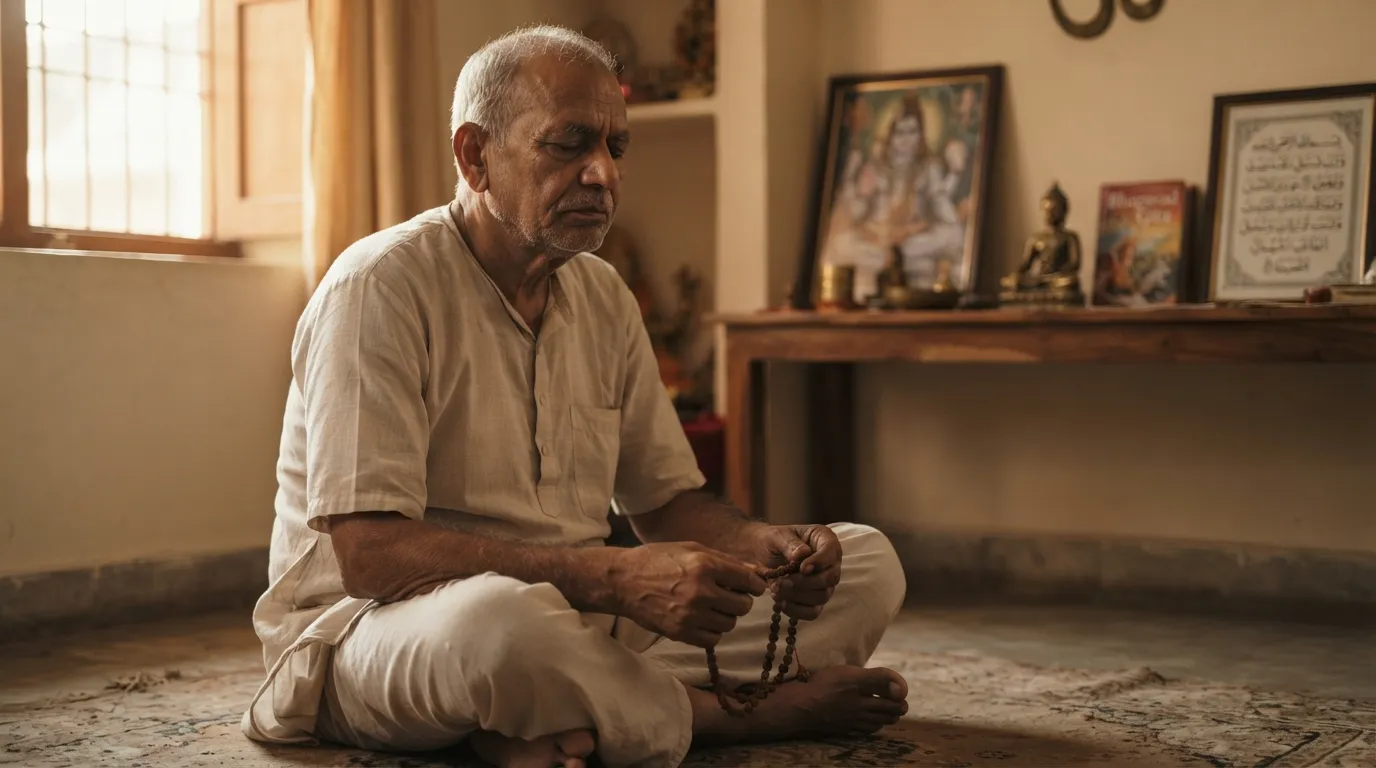
Introduction
Dreams have been part of human spiritual life for thousands of years. Across different religions, people have viewed dreams as possible sources of guidance, warnings, personal reflection, divine communication, or spiritual insight.
However, dream symbolism in different religions is not understood in exactly the same way. A dream considered meaningful in one tradition may be viewed more cautiously in another. Some faiths emphasize divine revelation, while others focus on self-awareness, spiritual discipline, or the temporary nature of experience.
Understanding these differences can help you look at dream symbolism with greater depth. Instead of assuming that every dream has one universal meaning, it is useful to consider the religious tradition, cultural background, personal emotions, and circumstances surrounding the dream.
What Does Dream Symbolism Mean?
Dream symbolism refers to the way images, events, people, objects, and experiences in dreams may be understood as representing something beyond their literal appearance.
For example, a dream about water might be interpreted in different ways.
One person may associate water with purification.
Another may see it as a symbol of danger or uncertainty.
Someone else may connect it with spiritual transformation.
Therefore, dream symbolism is not simply about creating a dictionary of symbols.
It is about understanding how a particular religious or cultural tradition gives meaning to dream experiences.
Religious traditions have historically used dreams in many different ways. Some have considered certain dreams prophetic. Others have treated them as opportunities for spiritual practice or self-examination. Historical scholarship also shows that Jewish, Christian, and Islamic traditions share important cultural and scriptural roots in their approaches to dreams.
Why Have Religions Paid Attention to Dreams?
Dreams are unusual experiences.
While sleeping, a person can see people who are far away, revisit childhood places, experience intense emotions, or encounter situations that could never happen in ordinary life.
For ancient societies, this raised an obvious question:
Where do dreams come from?
Without modern neuroscience, religious communities developed different explanations.
Some believed dreams could contain messages from God or other spiritual beings.
Others considered dreams reflections of the mind.
Some traditions warned that dreams could be misleading.
Others developed specific practices for working with dreams.
This diversity is important.
There has never been one universal religious theory of dreaming.
Dream Symbolism in Judaism
Judaism has a long history of engaging with dreams.
Dreams appear throughout the Hebrew Bible and later Jewish literature. Several important biblical figures receive dreams or visions that influence major events.
One of the most famous examples is Joseph.
Joseph experiences dreams involving symbolic imagery and later becomes known for interpreting dreams belonging to others.
His story establishes an important biblical connection between dreams, symbolism, interpretation, and divine providence.
Joseph and Symbolic Dreams
Joseph’s dreams include images that require interpretation.
His dreams are not simply ordinary conversations.
They contain symbolic scenes involving agricultural imagery, family relationships, and future events.
Later, Joseph interprets the dreams of Pharaoh.
The dreams involve cows and grain, and Joseph understands them as symbolic indicators of future abundance and famine.
This story became one of the most influential biblical examples of dream interpretation.
It suggests that, within the biblical narrative, some dreams may contain information that is not immediately obvious to the dreamer.
Dreams and Divine Communication in Judaism
Biblical Jewish tradition includes several examples of dreams and visions associated with divine communication.
However, this does not mean that Judaism teaches that every dream is automatically a message from God.
That distinction is important.
Jewish approaches to dreams have historically included both reverence and caution.
Later Jewish sources developed discussions about the reliability, interpretation, and spiritual significance of dreams.
Historical scholarship shows that rabbinic Jewish, Christian, and early Islamic traditions all developed models for thinking about prophetic dreams, although they did not always treat them in exactly the same way.
Common Symbolic Themes in Jewish Dream Traditions
Depending on the source and period, Jewish dream symbolism can involve ideas such as:
- Divine guidance
- Warnings
- Future events
- Moral reflection
- Blessing
- Danger
- Repentance
- Spiritual responsibility
Yet a modern reader should avoid treating these as a universal Jewish dream dictionary.
Jewish dream interpretation has developed across different historical periods and communities.
Dream Symbolism in Christianity
Christianity inherited many of its foundational dream traditions from Judaism.
The Old Testament contains numerous dreams and visions, while the New Testament also includes important dreams associated with major events.
Christian traditions therefore have a long history of considering whether dreams can carry spiritual significance.
Dreams in the Bible
Several biblical dreams are especially well known.
Joseph, the husband of Mary, receives dreams that guide his actions.
The Magi are warned in a dream not to return to Herod.
Daniel interprets dreams and visions.
Joseph in Genesis interprets dreams connected with future events.
These stories establish dreams as a recurring biblical theme.
Joseph’s Dreams in the New Testament
In the Gospel of Matthew, Joseph receives dreams that influence important decisions concerning Jesus.
These dreams function as guidance.
They are not presented simply as random psychological experiences.
This contributes to the Christian understanding that God may, in some circumstances, communicate through dreams.
However, Christian traditions have also emphasized discernment.
Not every dream should automatically be considered divine revelation.
Prophetic Dreams in Christianity
Christian history contains many accounts of dreams, visions, and spiritual experiences.
Some Christians view certain dreams as possible forms of divine guidance.
Others interpret dreams primarily through psychological or personal reflection.
Still others are cautious about dream interpretation because of the possibility of misunderstanding or deception.
This diversity means there is no single Christian approach to every dream.
Dreams and Discernment
A key idea in many Christian approaches is discernment.
If a dream seems spiritually significant, a person may consider:
- Does it agree with biblical teachings?
- Does it encourage wisdom and moral growth?
- Does it produce fear or confusion?
- Does it encourage harmful behavior?
- Is the interpretation consistent with Christian beliefs?
- Could the dream simply reflect recent experiences or emotions?
This approach discourages blindly following every dream.
Dream Symbolism in Islam
Dreams hold an important place in Islamic tradition.
The Qur’an contains significant dream narratives, particularly the story of Prophet Yusuf.
Islamic dream traditions also distinguish between different kinds of dreams and emphasize caution in interpreting them.
Prophet Yusuf and Dream Interpretation
The story of Yusuf is central to Islamic discussions of dreams.
As a young person, Yusuf experiences a significant dream.
Later in his life, he becomes known for interpreting dreams.
The Qur’an presents dream interpretation as a special knowledge granted by Allah.
This gives dream interpretation a respected place within Islamic tradition.
Dreams in the Qur’an
Dreams and visions appear in several Qur’anic narratives.
Yusuf’s story is especially important because it demonstrates how a symbolic dream can relate to future events.
The dreams of the king of Egypt also become central to the story.
Yusuf interprets the symbolic imagery and provides practical guidance for preparing for years of abundance and famine.
This example shows that dream interpretation in Islamic scripture is not merely about curiosity.
The interpretation has consequences for real-world decisions.
Different Types of Dreams in Islamic Tradition
Islamic teachings commonly distinguish between different sources or types of dreams.
A frequently discussed classification includes:
- Good or truthful dreams
- Disturbing dreams
- Dreams arising from a person’s own thoughts and concerns
This framework is important because it prevents people from assuming that every dream has divine significance.
Islamic dream traditions therefore combine openness to meaningful dreams with caution.
Good Dreams
A positive or truthful dream may be viewed as a possible form of good news or spiritual encouragement.
Such dreams can produce feelings of peace, hope, or reassurance.
However, interpretation still requires care.
Disturbing Dreams
Islamic teachings also recognize frightening or disturbing dreams.
A frightening dream should not automatically be treated as a prediction.
Traditional guidance encourages the dreamer not to become overwhelmed by such experiences.
This is an important distinction.
A nightmare may feel powerful without representing an actual future event.
Dreams and Personal Thoughts
Some dreams may simply arise from what occupies a person’s mind.
If you spend the entire day thinking about an examination, relationship, financial concern, or family problem, those subjects may appear in your dreams.
This idea creates an interesting connection between traditional religious understanding and modern psychological theories of dreaming.
Dream Symbolism in Hinduism
Hindu traditions contain some of the world’s oldest philosophical discussions of consciousness and dreaming.
Dreaming is not merely treated as an isolated nighttime phenomenon.
It can be considered in relation to waking consciousness, deep sleep, the self, and spiritual realization.
Some Hindu philosophical texts distinguish between waking, dreaming, and deep sleep as different states of consciousness.
Dreams and Consciousness
Hindu philosophy has often used dreaming to explore fundamental questions.
Who are you?
What is reality?
How does consciousness operate?
What happens when ordinary sensory experience disappears?
Dreaming becomes useful for these philosophical questions because the dreamer can experience an entire world while physically lying asleep.
Dreams in the Upanishadic Tradition
The Upanishads discuss different states of consciousness, including dreaming.
Dreaming can be used to explore the relationship between the individual self and perceived reality.
In this philosophical context, a dream is more than a collection of symbols.
It can become an illustration of how consciousness creates and experiences a world.
Spiritual Meaning of Dreams in Hindu Traditions
Hindu approaches vary considerably.
Some traditions give importance to dreams as possible signs.
Others emphasize that dreams are temporary experiences and should not become objects of attachment.
This creates an important principle:
A meaningful dream does not necessarily mean that the dreamer should become attached to its imagery.
The spiritual goal may instead involve understanding consciousness itself.
Auspicious and Inauspicious Dream Symbols
Traditional Hindu dream literature includes discussions of dreams that may be interpreted as favorable or unfavorable.
Certain animals, objects, people, places, colors, or events may receive symbolic associations.
However, these meanings can differ across texts, regions, and historical traditions.
Therefore, a single online “Hindu dream dictionary” should not be treated as representing all Hindu beliefs.
Dream Symbolism in Buddhism
Buddhist approaches to dreams are particularly interesting because Buddhism places strong emphasis on the nature of the mind.
Dreams can be used to explore attachment, perception, impermanence, and awareness.
Buddhist literature also contains important dream narratives.
The Buddha’s Great Dreams
One early Buddhist text, the Supina Sutta, describes five great dreams experienced by the Buddha before his awakening. These dreams contain striking symbolic imagery, including the earth as a bed and the Himalayas as a pillow.
These dreams are not presented simply as ordinary nighttime entertainment.
They form part of a religious narrative concerning the Buddha’s spiritual destiny.
Dreams and Impermanence
A central Buddhist concept is impermanence.
Everything conditioned changes.
Dreams provide an obvious illustration.
A dream may seem completely real while it is happening.
Then the dream disappears.
This can be used as a metaphor for the temporary nature of ordinary experiences.
Dreams and Attachment
Buddhist practice often emphasizes reducing attachment.
If a person becomes obsessed with a dream’s symbolism, that attachment itself may become part of the problem.
Instead of asking only:
“What does this dream predict?”
a Buddhist perspective may encourage questions such as:
“What does this dream reveal about my mind?”
“What emotions arose?”
“Was there attachment or fear?”
“How did the experience change?”
This makes dream reflection a potential mindfulness exercise.
Tibetan Buddhism and Dream Yoga
One of the most distinctive religious approaches to dreaming is found in Tibetan Buddhist traditions.
Dream yoga involves practices designed to cultivate awareness during dreams.
The goal is not simply entertainment.
Practitioners may use dreams as a field for developing awareness and reducing fear.
A scholarly review of religious approaches to lucid dreaming notes that Tibetan Buddhist traditions have long used dream yoga as a practice involving recognition of the dream state and conscious engagement with dream experience.
What Is the Spiritual Goal of Dream Yoga?
Dream yoga can involve recognizing that the dream is a dream.
This resembles modern lucid dreaming.
However, the spiritual context is different.
The goal is connected with Buddhist practice, awareness, and understanding the nature of experience.
The dream becomes a training environment.
If the practitioner realizes that a frightening dream is not ultimately solid or permanent, fear can be transformed.
Dreams as a Training Ground
A practitioner may use dream awareness to explore:
- Fear
- Attachment
- Illusion
- Impermanence
- Awareness
- Compassion
- Mental flexibility
This is one of the clearest examples of a religious tradition treating dreams as a tool for conscious spiritual development.
Comparing Abrahamic and Indian Religious Approaches
A broad comparison reveals an interesting difference.
Judaism, Christianity, and Islam often place considerable emphasis on the possibility that dreams can communicate information about divine will, guidance, warnings, or future events.
Traditional Hindu and Buddhist approaches often place greater emphasis on consciousness, self-awareness, spiritual practice, and the nature of experience.
A comparative review of religious approaches to lucid dreaming identifies this broad distinction, while also noting important variations within each tradition.
However, this should not become an oversimplification.
There are spiritual practices involving dreams in Abrahamic traditions.
Likewise, Hindu and Buddhist traditions can contain symbolic or significant dreams.
Religions are internally diverse.
How the Same Dream Symbol Can Mean Different Things
One of the most important lessons from comparative dream symbolism is that symbols do not have universal meanings.
Consider a snake.
In one tradition, a snake may represent danger.
In another context, it may represent transformation.
Elsewhere, it can be associated with wisdom, healing, temptation, or spiritual power.
The dreamer’s personal experience also matters.
If someone has a lifelong fear of snakes, their dream may have a very different emotional meaning from that of someone who keeps snakes as pets.
Therefore, interpretation requires context.
Water in Different Religious Traditions
Water is one of the most common dream images.
Religious traditions often associate water with powerful themes.
In Christianity, water can be connected with baptism, cleansing, renewal, and spiritual transformation.
In Judaism, ritual washing and purification give water important religious associations.
In Islam, water has important associations with purity, life, and purification.
In Hindu traditions, sacred rivers such as the Ganges have profound religious significance.
In Buddhism, water can appear in broader symbolic contexts involving purity, change, and mental experience.
Yet a dream about water should not automatically be assigned one religious meaning.
The dreamer’s feelings matter.
Calm water is psychologically different from drowning.
Clean water is different from polluted water.
Drinking water differs from being swept away by a flood.
Animals in Religious Dream Symbolism
Animals appear frequently in religious stories and dream traditions.
Examples include:
- Lions
- Snakes
- Birds
- Horses
- Sheep
- Fish
- Elephants
- Dogs
- Wolves
- Insects
Different traditions give these animals different associations.
The biblical lion can symbolize strength or danger depending on context.
The dove is strongly associated with peace and the Holy Spirit in Christian symbolism.
The fish has important Christian associations.
The elephant carries powerful symbolic associations in Hindu and Buddhist traditions.
The snake can carry both positive and negative associations across different religions.
This diversity demonstrates why dream symbolism should never be reduced to a universal list.
Birds in Religious Dreams
Birds often symbolize movement between earth and sky.
Because they fly, they can become associated with freedom, transcendence, spiritual messages, or divine presence.
Yet specific birds can have very different meanings.
A dove may evoke peace.
A raven may have darker associations in some traditions.
An eagle can represent strength or spiritual elevation.
In a dream, however, the meaning depends on the entire context.
A bird flying freely is different from a bird trapped in a cage.
Snakes in Different Religious Symbolisms
Snakes are especially complex.
In Christian symbolism, the serpent can be associated with temptation and the Fall.
Yet the biblical tradition also contains the image of the bronze serpent connected with healing.
In Hindu traditions, serpentine imagery can be associated with powerful spiritual concepts, including kundalini traditions.
In other cultural settings, snakes can represent renewal because of shedding their skin.
Therefore, dreaming about a snake does not automatically mean something negative.
Its religious interpretation depends on the tradition and context.
Light and Darkness in Religious Dreams
Light is one of the most widespread spiritual symbols.
It can represent:
- Knowledge
- Divine presence
- Truth
- Hope
- Awakening
- Guidance
Darkness can represent:
- Uncertainty
- Hidden information
- Fear
- Spiritual struggle
- The unknown
However, darkness is not automatically evil in every religious or spiritual context.
Some traditions also use darkness metaphorically to describe mystery, retreat, silence, or the unknown.
Death in Religious Dream Symbolism
Dreaming about death can be frightening.
However, religious traditions do not always interpret death literally.
Death imagery can symbolize:
- Transformation
- The end of a life stage
- Repentance
- Spiritual rebirth
- Impermanence
- Fear of loss
Christian traditions may connect death with resurrection and eternal life.
Buddhist traditions may emphasize impermanence.
Hindu traditions may connect death with broader ideas about rebirth and the continuity of consciousness.
Islamic traditions emphasize resurrection, accountability, and the afterlife.
Thus, the symbolism of death can differ dramatically between religious systems.
Pregnancy and Birth in Religious Dream Symbolism
Dreams about pregnancy or childbirth often involve themes of creation and new beginnings.
A person may dream about pregnancy even when they are not pregnant.
From a symbolic perspective, birth can represent:
- A new stage
- Growth
- Responsibility
- Creativity
- Transformation
- Spiritual development
Different religions may place additional meanings on birth, fertility, creation, or renewal.
Yet dream symbolism should not be treated as a medical prediction.
A dream about pregnancy does not scientifically confirm an actual pregnancy.
Fire in Religious Dream Symbolism
Fire is another powerful religious symbol.
It can represent:
- Purification
- Judgment
- Divine presence
- Destruction
- Transformation
- Passion
- Spiritual power
In Christianity, biblical stories contain important imagery involving divine fire.
In Hindu traditions, fire has major ritual significance.
Fire can therefore carry sacred associations across multiple traditions.
Yet fire can also symbolize danger.
A peaceful candle and a destructive wildfire should not be interpreted identically.
Mountains in Religious Dreams
Mountains frequently appear in sacred narratives.
They can represent:
- Spiritual elevation
- Revelation
- Challenge
- Solitude
- Closeness to the divine
- Transformation
Mountains are important in Jewish, Christian, Islamic, Hindu, and Buddhist religious landscapes and stories.
Therefore, dreaming about climbing a mountain may feel spiritually significant.
But again, context matters.
A person struggling to climb may experience the mountain as an obstacle.
Someone standing peacefully at the summit may experience it as achievement or revelation.
Religious Dreams and Personal Experience
A dream’s religious symbolism can be influenced by the dreamer’s background.
Someone raised in a Christian environment may naturally interpret a church, cross, angel, or biblical figure differently from someone raised in another tradition.
Similarly, a person familiar with Hindu temples may have strong emotional associations with particular deities or sacred places.
A Buddhist practitioner may interpret meditation or lotus imagery through a different framework.
This is why dream interpretation cannot be separated completely from culture.
Culture Changes Dream Meaning
Religious symbolism and cultural symbolism often overlap.
A symbol may have one meaning in scripture but another meaning in everyday culture.
For example, a particular animal might be viewed positively in one society and negatively in another.
Food, clothing, buildings, colors, family structures, and religious objects can all carry culturally specific associations.
Therefore, dream interpretation should consider both religion and culture.
Do All Religions Believe Dreams Predict the Future?
No.
This is one of the biggest misconceptions about religious dream interpretation.
Some traditions preserve stories of prophetic dreams.
That does not mean every dream is considered prophetic.
Even within traditions that accept the possibility of meaningful dreams, there may be warnings against excessive reliance on dream interpretation.
Historical scholarship shows that religious communities have long debated whether dreams should be understood as divine revelations, psychological experiences, bodily phenomena, or potentially misleading experiences.
Why Some Religious Traditions Warn Against Dream Interpretation
Dreams can be emotionally powerful.
That creates a risk.
Someone may have a frightening dream and assume disaster is coming.
Another person may dream about a stranger and believe the dream requires an immediate life decision.
Religious traditions that emphasize discernment often warn against this kind of certainty.
The safer approach is to consider the dream without automatically treating it as a command or prophecy.
Dreams, Symbols, and Spiritual Discernment
If you believe a dream may have spiritual significance, consider several questions.
What Was the Main Emotion?
Fear?
Peace?
Joy?
Confusion?
Hope?
What Happened Before the Dream?
Was there a major life event?
Were you worried about something?
Had you been praying or meditating about a particular issue?
Does the Dream Encourage Good Values?
A spiritual interpretation should not be used to justify cruelty, hatred, or harmful behavior.
Is the Meaning Consistent With Your Tradition?
If you follow a particular religion, compare your interpretation with reliable teachings rather than random internet dream dictionaries.
Could There Be a Psychological Explanation?
Dreams can also reflect memories, stress, emotions, and daily experiences.
Considering a psychological explanation does not necessarily eliminate personal spiritual meaning.
Dream Dictionaries vs. Religious Traditions
Online dream dictionaries are extremely popular.
They often provide a simple formula:
Symbol = Meaning
For example:
“Dreaming about a snake means transformation.”
Or:
“Dreaming about water means emotions.”
These formulas can be useful as starting points.
But they are not reliable universal rules.
Religious traditions are much more complex.
The same symbol may have several meanings depending on scripture, historical context, culture, and the circumstances of the dream.
Why Context Is More Important Than One Symbol
Suppose you dream about a snake.
Instead of asking only:
“What does a snake mean?”
ask:
- Was the snake attacking you?
- Were you afraid?
- Were you observing it calmly?
- Was it protecting you?
- Was it dead?
- Was it changing its skin?
- Was it in your home?
- Did the snake remind you of someone?
- What religious tradition are you interpreting the dream through?
These questions create a much richer interpretation.
Religious Dreams vs. Psychological Dreams
A religious interpretation and a psychological interpretation do not necessarily have to compete.
A person can ask:
“What might this dream mean psychologically?”
and also:
“What spiritual meaning does this dream have for me?”
The answers may overlap.
For example, a dream about being lost could psychologically reflect uncertainty.
Spiritually, someone might interpret it as a call to seek guidance.
Neither interpretation automatically proves that the dream came from a supernatural source.
What Modern Science Says About Religious Dreams
Modern neuroscience approaches dreams differently from religious traditions.
Scientific research studies:
- Brain activity
- REM sleep
- NREM sleep
- Memory
- Emotion
- Consciousness
- Sleep disorders
- Dream recall
Religious traditions ask different questions about spiritual significance.
A scientific study can investigate what happens in the brain during a dream.
It cannot scientifically prove that a particular dream was sent by God.
Likewise, science cannot settle every personal spiritual question someone may have about a dream.
This distinction is important.
Dreams as Sacred Experiences
Throughout history, people have treated some dreams as sacred experiences.
A dream can feel different from an ordinary thought.
It may be unusually vivid.
It may contain a deceased loved one.
It may seem emotionally profound.
It may contain religious figures.
It may occur during a major life transition.
Such experiences can have powerful personal meaning.
However, personal significance should not automatically be confused with universal religious doctrine.
Common Religious Dream Symbols and Their Broad Themes
Although meanings differ, some broad themes appear repeatedly across religious traditions.
Water
Often associated with life, cleansing, purification, emotion, or transformation.
Light
Often connected with knowledge, guidance, truth, or divine presence.
Fire
Can symbolize purification, transformation, divine power, judgment, or destruction.
Mountains
May represent spiritual elevation, revelation, challenge, or closeness to the sacred.
Birds
Can suggest freedom, transcendence, communication, or spiritual movement.
Snakes
May symbolize danger, temptation, transformation, healing, wisdom, or spiritual energy depending on tradition.
Birth
Often relates to creation, renewal, growth, or a new beginning.
Death
May represent endings, transformation, impermanence, resurrection, or rebirth.
Angels or Divine Beings
May represent guidance, protection, revelation, or spiritual authority within traditions that recognize such beings.
These are broad themes, not universal rules.
How to Interpret a Dream Through Your Own Religion
If you want to explore a dream from a religious perspective, begin with your own tradition.
Read the relevant scriptures.
Look at how the symbol is used in its original context.
Consider trusted religious scholarship.
Then compare that information with your personal circumstances.
Avoid relying exclusively on social media posts or generic dream dictionaries.
Step 1: Record the Dream
Write down everything you remember.
Step 2: Identify the Strongest Symbol
What image stands out most?
Step 3: Identify the Emotion
How did you feel?
Step 4: Research Your Tradition
Look at reliable religious sources.
Step 5: Consider Your Life
What is happening right now?
Step 6: Avoid Absolute Claims
Treat your interpretation as a possibility rather than guaranteed prophecy.
Dreams and Prayer
In many religious traditions, people respond to meaningful dreams through prayer.
Prayer can provide a way to reflect without immediately acting on the dream.
Instead of asking only:
“What will happen?”
a person may ask:
“What should I learn from this experience?”
This shifts attention from prediction toward reflection.
Dreams and Spiritual Growth
A dream can sometimes become a prompt for personal growth.
Perhaps it highlights fear.
Perhaps it reminds you of forgiveness.
Perhaps it brings attention to a neglected relationship.
Perhaps it encourages you to reconsider a decision.
Even when a dream is not supernatural, reflecting on it can still help you understand your emotional life.
The Most Important Difference Between Religions
The biggest difference is not necessarily which symbols each religion uses.
It is what the dream is believed to be doing.
In some traditions, dreams can reveal information.
In others, dreams can train awareness.
In others, dreams may expose the condition of the mind.
Some traditions emphasize divine communication.
Others emphasize consciousness.
Some combine several approaches.
This is why dream symbolism in different religions is such a rich subject.
Similarities Across Religious Traditions
Despite major differences, several common themes appear.
Dreams Can Feel Meaningful
Across cultures, people often experience dreams as more than random images.
Dreams Can Contain Symbolism
Religious literature frequently presents dreams through symbolic narratives.
Dreams Can Influence Behavior
Biblical and other religious stories show people making decisions based on dreams.
Dreams Can Raise Questions About Reality
Hindu and Buddhist traditions especially use dreaming to explore consciousness and perception.
Dreams Can Encourage Reflection
Across traditions, dreams can become opportunities for moral or spiritual examination.
Differences Across Religious Traditions
The differences are equally important.
Judaism often connects important dreams with biblical revelation and interpretation.
Christianity inherits these traditions and emphasizes discernment alongside the possibility of divine guidance.
Islam gives significant attention to dreams and includes important distinctions concerning their possible sources.
Hindu traditions connect dreaming with broader philosophical questions about consciousness.
Buddhist traditions can use dreams to investigate impermanence, awareness, and the nature of mind.
These descriptions are broad summaries.
Every religion contains internal diversity.
Should You Believe Every Spiritually Significant Dream?
No.
Even if you are deeply religious, caution is valuable.
A dream can be emotionally powerful without being a divine instruction.
Consider the possibility that the dream reflects:
- Stress
- Memory
- Fear
- Hope
- Recent conversations
- Religious imagery
- Personal concerns
- Ordinary brain activity during sleep
A balanced approach allows spiritual reflection without surrendering critical thinking.
Frequently Asked Questions About Dream Symbolism in Different Religions
What is dream symbolism in different religions?
Dream symbolism in different religions refers to the ways various faith traditions understand the meaning of dream images, experiences, visions, and symbolic events. Different religions may view dreams as divine messages, psychological experiences, spiritual training, or reflections of consciousness.
Which religions believe dreams can be messages from God?
Judaism, Christianity, and Islam all contain important scriptural traditions involving dreams and divine communication. However, this does not mean that every dream in these traditions is automatically considered a message from God.
What does the Bible say about dreams?
The Bible contains many significant dreams and visions. Joseph interprets dreams in Genesis, Daniel interprets dreams and visions, and Joseph in the New Testament receives dreams that guide important decisions.
What does Islam say about dreams?
Islamic tradition gives dreams an important place and distinguishes between different types of dream experiences. The Qur’anic story of Yusuf is especially important because it presents dream interpretation as a form of knowledge granted by Allah.
Does Hinduism believe dreams are meaningful?
Hindu traditions contain extensive discussions of dreaming and consciousness. Some traditions give importance to symbolic dreams, while Hindu philosophy also uses the dream state to explore consciousness, perception, and the nature of reality.
What does Buddhism say about dreams?
Buddhist traditions contain significant dream narratives and practices. Dreams can be understood in relation to the mind, impermanence, awareness, and spiritual practice. Tibetan Buddhist dream yoga specifically develops awareness during dreaming.
Are dream symbols universal across religions?
No. A symbol can have different meanings across religions and cultures. Even within one religious tradition, its meaning can change depending on scripture, historical period, community, and personal context.
What does water symbolize in religion?
Water can symbolize cleansing, purification, life, renewal, spiritual transformation, or danger depending on the religious and personal context.
What does fire symbolize in religious dreams?
Fire may symbolize purification, divine presence, transformation, judgment, passion, or destruction. Its meaning depends heavily on the religious tradition and dream context.
Can dreams predict the future?
Some religious traditions contain stories of prophetic dreams, but that does not establish that ordinary dreams reliably predict future events. A dream should not automatically be treated as a guaranteed prediction.
Why do religions interpret the same dream symbol differently?
Religious symbols develop within particular scriptures, histories, cultures, rituals, and philosophical systems. As a result, the same image can acquire different meanings.
Are dreams considered messages from God in Christianity?
Some Christian traditions accept that God can communicate through dreams. However, Christianity also emphasizes discernment, and not every dream is necessarily considered divine revelation.
Does Judaism encourage dream interpretation?
Jewish tradition contains important discussions of dreams and dream interpretation, particularly through biblical and rabbinic sources. However, Jewish approaches have varied across history and should not be reduced to a single dream dictionary.
What is dream yoga?
Dream yoga is a practice associated particularly with Tibetan Buddhist traditions. It involves cultivating awareness during dreams and using dream experience as part of spiritual practice.
Is dream symbolism spiritual or psychological?
It can be viewed through either framework. Religious interpretation asks about spiritual meaning, while psychology examines emotions, memories, cognition, and personal experiences. The two approaches ask different questions.
Should I use a dream dictionary to interpret my dream?
A dream dictionary can provide ideas, but it should not be treated as an authoritative representation of every religious tradition. Context, personal associations, and the specific religious framework are much more important.
Can a dream have more than one meaning?
Yes. A dream can have psychological, emotional, cultural, and spiritual significance at the same time. Its meaning may also change as your life circumstances change.
Why are religious figures common in dreams?
Religious figures may appear because they are emotionally important, familiar, culturally significant, or connected with personal beliefs. Their appearance does not automatically prove that the dream is a supernatural encounter.
What is the safest way to interpret a spiritual dream?
Record the dream, identify its strongest emotions, consider recent experiences, examine the symbolism within your religious tradition, and avoid making major decisions based solely on a dream.
Final Thoughts on Dream Symbolism in Different Religions
The history of religion shows that humans have never had just one way of understanding dreams.
For some traditions, dreams can represent divine communication.
For others, they can reveal something about the mind.
For others, they can become a practice ground for awareness.
Some traditions emphasize prophecy.
Others emphasize discernment.
Some focus on consciousness and impermanence.
This diversity is what makes dream symbolism in different religions so fascinating.
Judaism, Christianity, and Islam share important historical and scriptural connections involving dreams, prophecy, and divine communication. Scholarly research shows that these traditions developed both similarities and differences in how dreams were categorized and interpreted.
Hindu and Buddhist traditions offer another perspective.
Dreaming can become part of a much broader discussion about consciousness, perception, self-awareness, and spiritual practice. Buddhist dream yoga, for example, treats awareness during dreaming as a potential form of training rather than simply a method of predicting the future.
The most important lesson is that no single dream symbol has one universal meaning.
A snake can mean different things.
Water can mean different things.
Fire can mean different things.
Death can mean different things.
Even the same dream can mean something different to the same person at different stages of life.
Therefore, meaningful dream interpretation requires context.
Look at your religious tradition.
Look at the original symbolism.
Look at your emotional response.
Look at what is happening in your waking life.
And most importantly, avoid confusing possibility with certainty.
A dream may inspire reflection without becoming a prophecy.
It may carry personal meaning without being a supernatural message.
It may reveal an emotion without predicting an event.
It may even be simply a fascinating product of the sleeping mind.
Religious traditions give us many different ways to approach these experiences.
Modern science gives us another.
Together, they remind us that dreams can be studied from multiple perspectives while still preserving the mystery that has fascinated humanity for thousands of years.

Gabriel is a passionate writer and humor enthusiast at My Dream Website, dedicated to creating engaging, entertaining, and reader-friendly content. With a talent for crafting clever puns, heartfelt messages, and trending lifestyle articles, Gabriel enjoys turning everyday topics into fun and memorable reads. His work focuses on delivering fresh, updated, and SEO-friendly content